
Law Enforcement Technology: A Practical Guide (2026)
Body cams, analytics, transcription and records systems judged by workflow fit, not feature count. A four-step review, governance traps, and vendor questions.
12 min read
•
May 17, 2026
Written by
Adrian Ispas
A lot of police technology decisions start in a conference room, not in a patrol car.
A chief, city manager, or finance director is looking at a proposal for cameras, analytics, transcription, drones, or a new records platform. One person asks whether the tool will improve response and investigations. Another asks whether it creates privacy risk. A third asks the practical question that usually matters most: how will you prove this purchase worked after the budget is approved?
That's the actual challenge with law enforcement technology. The market is full of capable products, but capability alone isn't the same as operational value. The agencies that get results usually don't buy the most features. They buy tools that fit a clear workflow, integrate with existing systems, and can be governed responsibly.
The Growing Role of Technology in Modern Policing
Law enforcement technology is no longer a side purchase for specialized units. It's becoming part of the operating foundation of modern public safety.
That shift is visible in market spending. Grand View Research estimated the global law enforcement software market at USD 18.26 billion in 2025 and projected it to reach USD 40.76 billion by 2033, with a 10.4% CAGR from 2026 to 2033 according to its law enforcement software market report. That scale matters because agencies increasingly treat software for dispatch, records, analytics, evidence, and reporting as infrastructure, not as optional add-ons.
Why leaders feel pressure right now
Most agencies are being pushed from several directions at once:
- Operational pressure means officers need faster access to information in the field.
- Administrative pressure means supervisors want less duplicate entry, fewer paper-heavy processes, and cleaner reporting.
- Public pressure means communities and oversight bodies expect stronger accountability and clearer policies.
- Budget pressure means every purchase has to be justified against staffing, fleet, training, and other competing needs.
That mix changes the buying conversation. Ten years ago, a department might have asked, “Which product has the most features?” Today, the better question is, “Which product solves a known problem without creating new ones?”
Practical rule: If you can't describe the workflow problem in one sentence, you're not ready to buy the technology.
What decision-makers actually need
The useful way to think about law enforcement technology is as a stack of connected systems. Cameras collect evidence. CAD and RMS move information. Analytics help staff find patterns. Transcription and search tools reduce manual review. Governance policies decide what should happen, who can access it, and how long data should stay.
That means the strongest purchase decision usually isn't about the tool itself. It's about fit.
A chief may need to shorten report turnaround. A detective bureau may need to search interviews faster. A city manager may need to show the council that a tool improves service without weakening privacy safeguards. Those are different problems, and they require different evaluation standards.
The Core Categories of Modern Police Tech
The easiest way to understand modern police technology is to sort it by job, not by brand. Most tools fall into a few practical categories: systems that observe, systems that organize, systems that connect, and systems that support field response.
A National Institute of Justice survey found the most commonly adopted technologies were car cameras at 70% of agencies, information-sharing platforms at 68%, and social media at 68% according to the NIJ survey report. That tells you something important. For many agencies, the baseline is already digital evidence capture and digital information exchange.
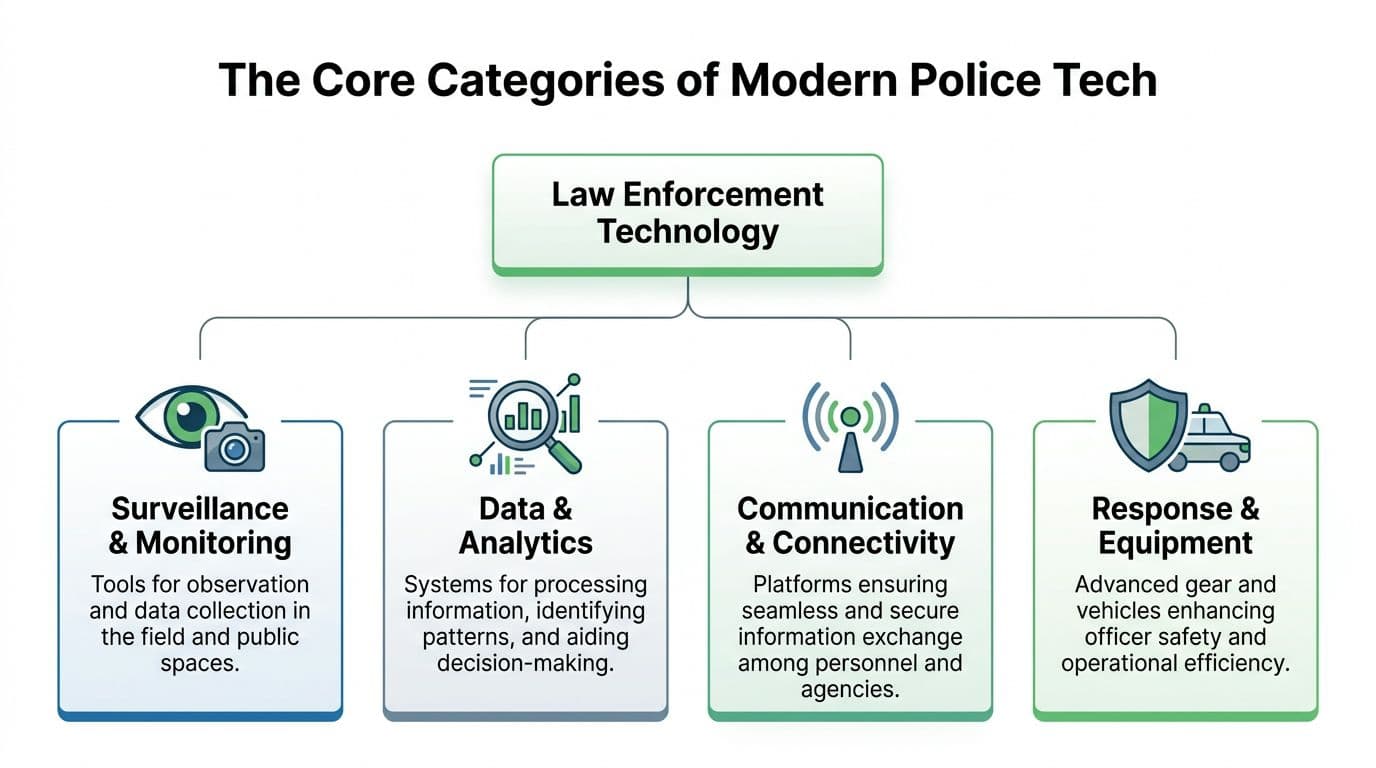
Four categories that matter most
| Technology Category | Examples | Primary Function |
|---|---|---|
| Surveillance and Monitoring | Body-worn cameras, in-car video, drones, ALPR/LPR, CCTV | Capture events, document encounters, and extend field awareness |
| Data and Analytics | RMS, crime analysis tools, search platforms, AI-assisted review | Organize information, identify patterns, and support investigations |
| Communication and Connectivity | CAD, mobile data terminals, information-sharing platforms, secure messaging | Move information quickly between dispatch, officers, and partner agencies |
| Response and Equipment | Digital evidence tools, mobile devices, vehicle systems, interview recording tools | Help officers and investigators work safely and efficiently in the field |
What each category is really for
Surveillance and monitoring tools answer “What happened?” They create footage, plate reads, or aerial views that can support investigations and public accountability. Their value depends heavily on policy. A camera program without retention rules, review procedures, and training often creates more storage and disclosure work than expected.
Data and analytics tools answer “What does this connect to?” These systems help staff search prior incidents, compare persons and vehicles across records, and reduce the time spent manually checking disconnected sources. This is also where marketing claims can get ahead of reality, especially when vendors promise “AI insights” without explaining limits.
Communication and connectivity tools answer “Who needs to know right now?” Dispatch, mobile access, and information-sharing systems matter because speed matters. A useful system doesn't just send information. It sends the right information to the right person with as little friction as possible.
Response and equipment tools answer “How does work get done on shift?” This category includes the practical layer many leaders overlook. Devices, in-car hardware, digital interview systems, and evidence capture tools don't sound glamorous, but they often determine whether the larger platform gets used consistently.
Good police technology usually disappears into the workflow. If officers have to work around it, adoption will suffer.
One common buying mistake
Many agencies buy by category label instead of operational use case. “We need drones” or “we need AI reporting” is too broad. Better framing sounds like this:
- For patrol: “We need field access to incident history and cleaner report completion.”
- For investigations: “We need to search interviews and evidence faster.”
- For command staff: “We need audit trails, policy controls, and reporting.”
- For city leadership: “We need a program we can defend publicly.”
If your agency is looking at defense and security-focused AI workflows, Vatis Tech's defense and security page is one example of how vendors position secure speech and analysis tools for sensitive environments.
Drone programs also deserve a more disciplined business case than they often get. For teams considering aerial support, this guide on how drone operators can measure program ROI is useful because it pushes the conversation beyond equipment specs and toward operational outcomes.
Technology in Action Daily Police Workflows
The true value of police technology shows up in the handoff between systems.
A dispatcher receives a call. CAD creates the event. The officer sees the call in the car, checks location details, and reviews related information before stepping out. If the systems are integrated well, the officer doesn't need to wait until the end of shift to piece together context.
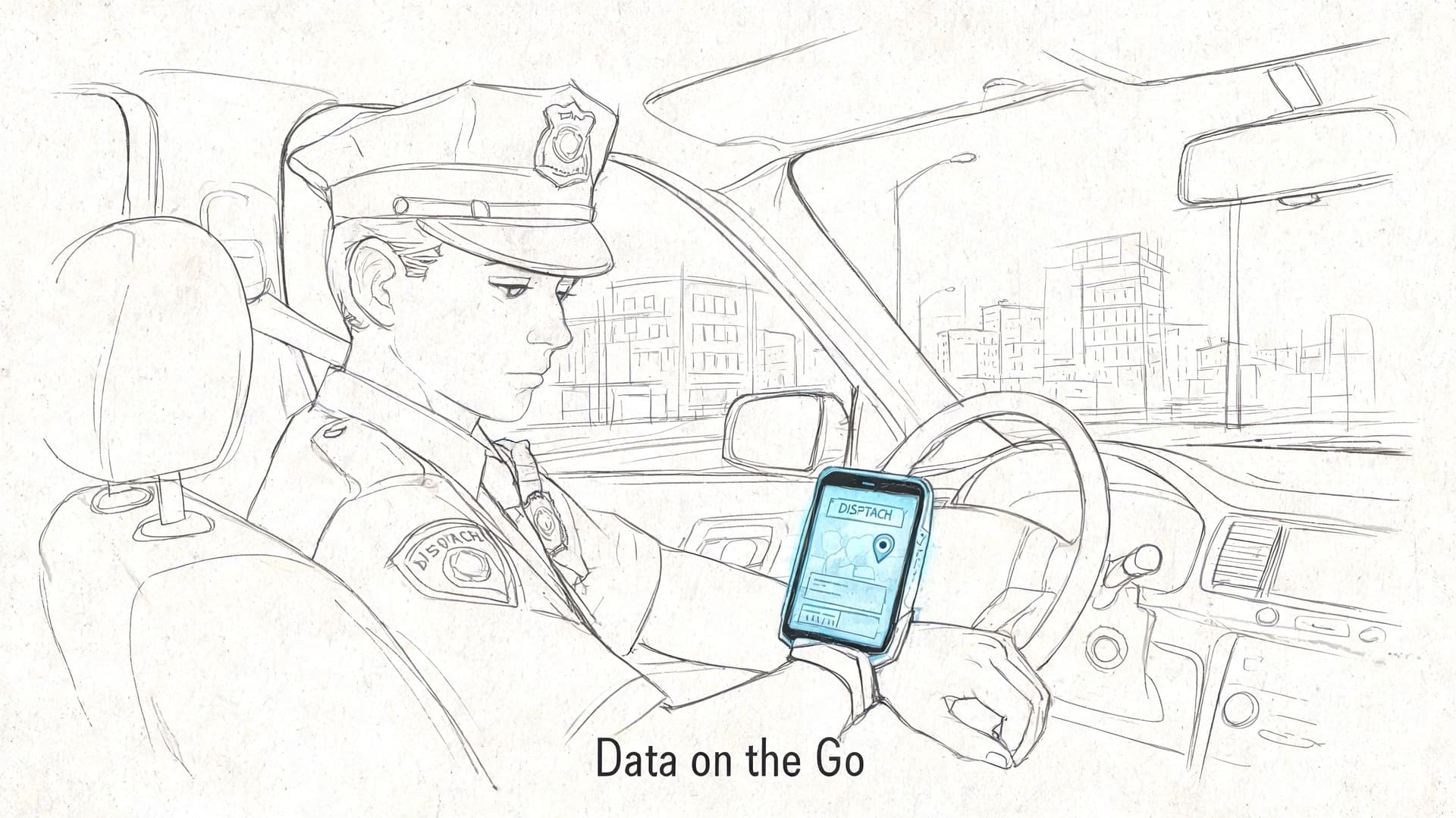
A patrol example that makes this concrete
In practice, CAD and RMS are integrated with state and federal databases like NCIC and Nlets, which allows officers to run queries from the patrol car and file reports in the field, improving situational awareness and reducing administrative time, as described in the COPS Office publication on integrated systems.
That sounds technical, but the field impact is simple:
- Dispatch enters the call
The event is created once, not rewritten repeatedly across disconnected systems. - The officer receives context in the vehicle
Address history, involved parties, or related flags may already be visible depending on policy and permissions. - The officer runs checks without returning to the station
Queries can happen from the car instead of through a slower relay process. - The report starts close to the event
Details are fresher, and the handoff to supervisors or detectives is cleaner.
Why this matters to patrol and investigations
When agencies talk about efficiency, they often mean saving minutes in places that repeat hundreds of times. A shorter query process. Fewer duplicate entries. Less retyping from handwritten notes. Faster transfer from patrol to investigations.
That's also where audio tools have become more relevant. Detectives and supervisors increasingly need interview recordings, statements, and call audio converted into searchable text. Instead of listening linearly through long files, staff can search names, times, and keywords.
One example in that category is audio intelligence tools for transcription and analysis, which are designed to turn recorded speech into searchable text and extract usable information from it. Used carefully, tools like that can support interview review, evidence organization, and multilingual workflows.
The strongest automation in policing usually removes clerical delay, not human judgment.
A place where teams get confused
Many leaders assume “integration” means the systems come from the same vendor. That isn't always true. What matters is whether data moves reliably, permissions are clear, and staff can use the workflow under real shift conditions.
The same caution applies to open-source and online investigative work. Username checks and cross-platform identity clues can help generate leads, but they need verification and policy discipline. For readers who want a plain-language look at online identity tracing methods, this article on how to uncover a person's digital skeleton key is a useful reference point for understanding the broader digital footprint environment.
A Framework for Evaluating and Implementing Technology
The hardest part of law enforcement technology isn't finding products. It's separating tools that look impressive in a demo from tools that hold up in daily operations.
The U.S. Bureau of Justice Assistance warns that technology can improve outcomes, but it can also reduce efficiency or fail to perform as expected according to its report on law enforcement technology and performance. That single point should shape every procurement conversation.
Start with the problem, not the platform
A disciplined evaluation starts by naming the operational issue in plain language.
Bad framing sounds like this: “We need AI.”
Better framing sounds like this: “Detectives spend too much time reviewing interview recordings,” or “patrol officers duplicate report entry across systems.”
Use questions like these before you issue an RFP or sit through a demo:
- Where exactly is time being lost
- Which staff roles are affected most
- What does success look like in daily work
- What policy or training burden comes with the tool
- What existing system has to connect to it
A practical four-step review process
Define the mission need
Write a short operational statement. Keep it specific enough that line supervisors would recognize it immediately.
Examples:
- Interview review is slow because audio isn't searchable.
- Officers return to the station to complete work that should happen in the field.
- Digital evidence is stored in too many separate places to search efficiently.
Demand proof that fits your environment
Ask vendors for evidence tied to deployments like yours. If they can only talk about feature lists, that's a warning sign.
Look for:
- Workflow fit rather than flashy demonstrations
- Integration detail with CAD, RMS, evidence, or identity systems
- Training plan for patrol, detectives, supervisors, and admins
- Governance controls including audit logs, permissions, retention, and review settings
Pilot with a narrow scope
Don't test with the whole agency first. Pick a unit, shift, or use case. Define what you'll observe before the pilot begins.
Useful pilot measures are often qualitative and operational:
- Are officers using the tool on shift?
- Are detectives finding information faster?
- Are supervisors seeing fewer report corrections?
- Are privacy or records issues increasing?
Decision test: If you can't explain what failure would look like before the pilot starts, the pilot isn't structured well enough.
Plan the non-technical work
Many projects break down at this stage. The technology may function perfectly, while the implementation fails because no one owned policy updates, user training, records handling, or procurement sequencing.
A full implementation plan should cover:
- Policy ownership so retention, access, review, and disclosure are clear
- Training cadence because one launch-day session won't stick
- Change management for unions, supervisors, records staff, and prosecutors
- Support model for outages, updates, and user questions
The best question to ask vendors
Ask, “What has to be true in our environment for this system to work well?”
That question forces a more honest discussion. It surfaces dependencies, staffing assumptions, network needs, policy gaps, and change-management demands. It also shifts the conversation from product theater to implementation reality.
Navigating the Complex Legal and Ethical Landscape
Police technology isn't neutral just because it's digital. Every system reflects choices about collection, retention, access, review, and action.
That becomes most obvious with biometric and AI-driven tools. A system can be fast and still be wrong. It can be useful and still create unfair risk if governance is weak.
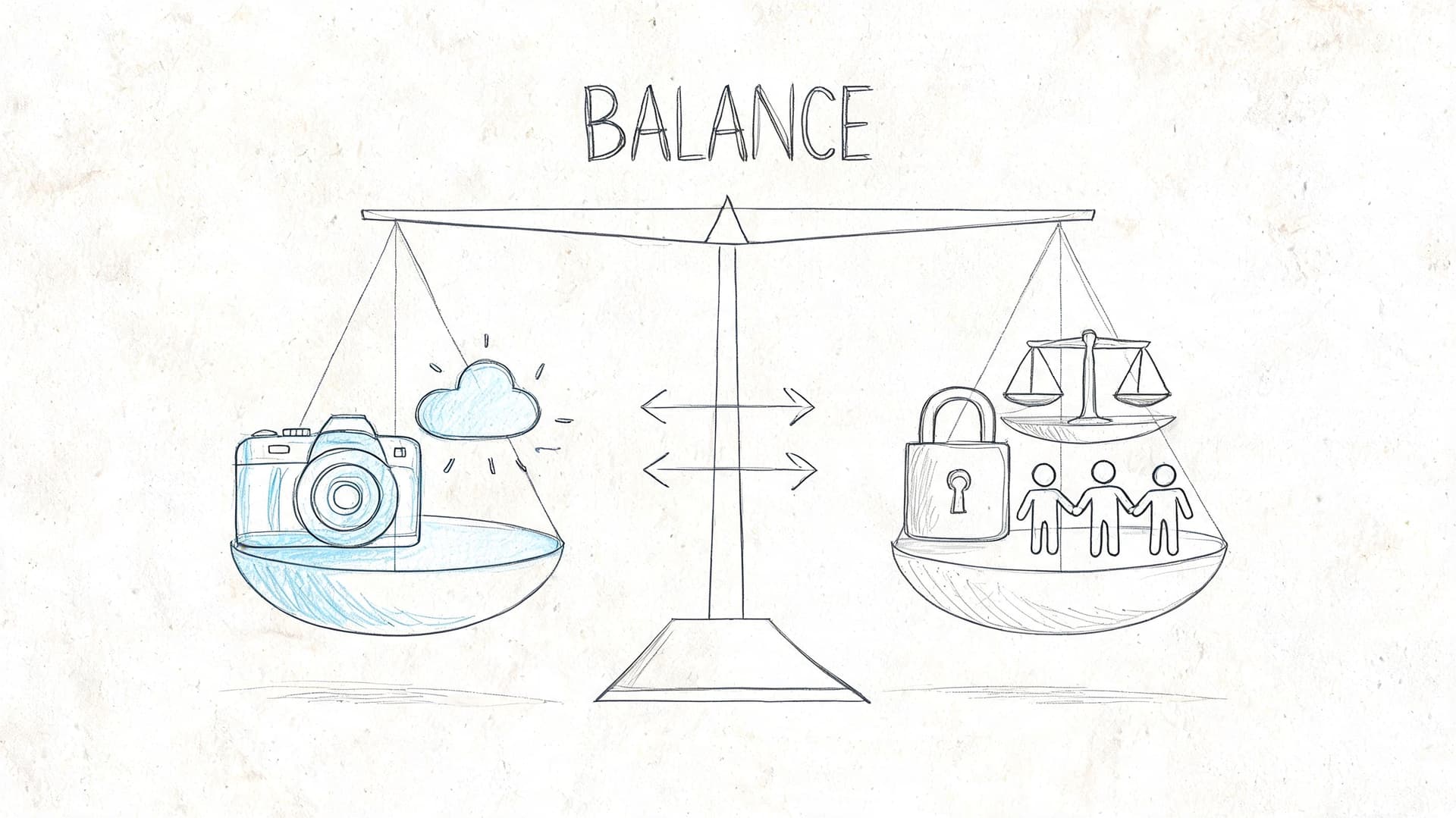
Face recognition is the clearest example
The Center on Privacy & Technology at Georgetown described face recognition as a “forensic without the science” in many U.S. criminal investigations in its report on face recognition in criminal investigations. For decision-makers, the lesson isn't just about one tool. It's about the standard you apply to all high-impact systems.
If a technology influences stops, identifications, charging decisions, or surveillance scope, leaders need answers to basic governance questions:
- How are errors detected
- What human review is required
- Who can access the system
- How long is data retained
- What gets logged for audit
- How will the public understand the policy
Common risk areas agencies underestimate
Privacy and data retention
Departments often focus on collection and underestimate storage. But retention rules shape public trust as much as cameras or sensors do. If you can't explain why data is kept and when it is deleted, you've left a policy gap.
Bias and model behavior
AI tools may assist triage, summarization, or identification. That doesn't remove the need for supervision. Staff need to know when a model is assisting, what inputs it used, and when not to trust its output.
Chain of custody and disclosure
Digital evidence has to remain defensible. That means clear logs, consistent handling, and documented edits or transformations. Even a useful transcript or summary can raise questions if the workflow isn't documented.
A broader compliance-first mindset helps here. Privacy, controls, and deployment discipline are design requirements rather than afterthoughts.
Governance has to be operational
Policy documents alone won't carry this. Governance has to show up in daily workflow, supervisor review, public disclosure, and legal response.
That includes basic recording questions too. Rules differ by jurisdiction, and departments need clear guidance before staff rely on captured calls or conversations. A simple primer on recording a phone conversation can help illustrate why recording practices need legal review and documented procedure before they become routine evidence steps.
Technology is easiest to defend when the policy is boring, clear, and consistently followed.
Future Trends Redefining Public Safety
The next phase of law enforcement technology won't be defined by a single device. It will be defined by faster decision cycles.
Agencies are moving toward environments where video, audio, records, location data, and field reporting feed a more immediate operating picture. That doesn't mean every department needs a futuristic command center. It means more systems will try to reduce the lag between event, information, and action.
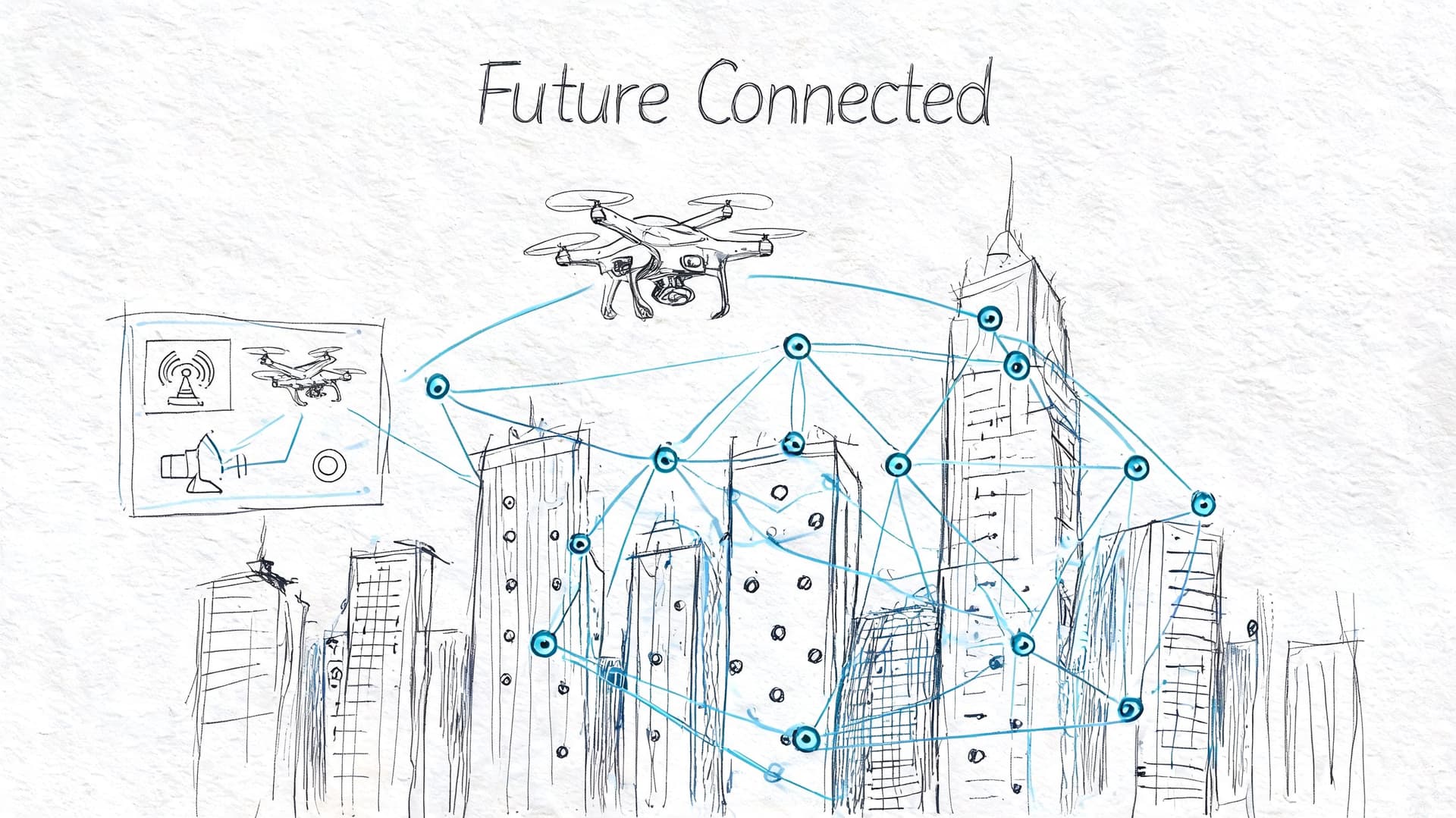
What agencies should watch closely
One direction is real-time intelligence. Multi-source analytics increasingly combine historical records, plate-reader data, CCTV, and in some cases live video so investigators can search across sources in one place, reducing manual cross-searching, as described in this overview of technologies shaping law enforcement in 2025. The attraction is obvious. Faster correlation can help staff connect people, places, vehicles, and events under pressure.
Another shift is administrative automation. Report drafting, transcription, translation, and summarization are moving into everyday workflows. That can help patrol, detectives, records teams, and prosecutors, especially where staffing is tight and large volumes of audio or narrative have to be reviewed.
A third trend is training modernization. VR and AR tools are drawing interest because they can create repeatable scenarios for de-escalation, judgment, and tactical communication. The useful question isn't whether simulation looks impressive. It's whether it improves coaching, consistency, and after-action review.
A short video can help frame how connected systems are changing the operating environment:
The future question leaders should ask now
The key issue isn't “What's the next big tool?” It's “Which new tools fit our governance model and operating reality?”
Watch for these signals:
- Human review remains explicit in high-stakes uses
- Procurement language gets more specific about auditability and retention
- Interoperability matters more than standalone feature depth
- Training expands beyond technical use to legal and supervisory use
The agencies that adapt well will likely be the ones that treat innovation as a managed process. They'll test narrowly, write policy early, involve legal and records staff sooner, and expect every new system to prove its place in the workflow.
Frequently Asked Questions About Police Technology
What's the first technology upgrade most agencies should prioritize
Usually, it's the one that removes friction from a daily workflow. For one agency that might be CAD and RMS integration. For another, it might be digital evidence organization or transcription for interviews. Start where staff lose time every shift, not where the product demo looks most advanced.
How can smaller agencies evaluate tools without a large IT team
Keep the evaluation narrow. Define one use case, involve the people who do the work, and ask vendors to show exactly how the tool fits that workflow. Smaller agencies should also pay close attention to training demands, vendor support, records impact, and whether the system depends on outside integration work.
How should agencies think about data security
Think in layers. Ask where data is stored, who can access it, what gets logged, how retention is managed, and how exports are controlled. Security isn't just encryption. It's also permissions, audit trails, and clear procedures for evidence handling and public records response.
Is AI in policing mainly about surveillance
No. Some AI use cases involve surveillance or identification, but many are administrative. Drafting reports, transcribing interviews, translating audio, sorting evidence, and summarizing large volumes of information are different from making investigative or enforcement decisions. Those uses still need oversight, but the risk profile isn't always the same.
What makes a pilot program successful
A good pilot is small, specific, and measurable in operational terms. The agency knows who is testing the tool, what problem it's supposed to solve, what failure would look like, and what policy questions need answers before expansion.
How do you avoid buying technology that doesn't get used
Involve end users early. Patrol officers, detectives, supervisors, records staff, and prosecutors often see implementation problems before executives do. If the product adds clicks, creates duplicate work, or doesn't fit real shift conditions, adoption will lag no matter how strong the feature list is.
What's the biggest mistake in law enforcement technology procurement
Buying for capability instead of fit. A tool can be highly advanced and still be wrong for the agency. The better path is simple: define the problem, test the workflow, check the governance burden, and only scale what proves useful in practice.
If your team is evaluating secure audio and transcription workflows for investigations, reporting, or multilingual review, Vatis Tech offers speech-to-text and audio intelligence tools that can fit into broader public safety documentation processes. The practical next step is to compare any option against your existing workflow, policy requirements, and evidence-handling standards before moving from pilot to full deployment.